Podcast transcription for small agencies: turn one episode into SEO pages, clips, and newsletters
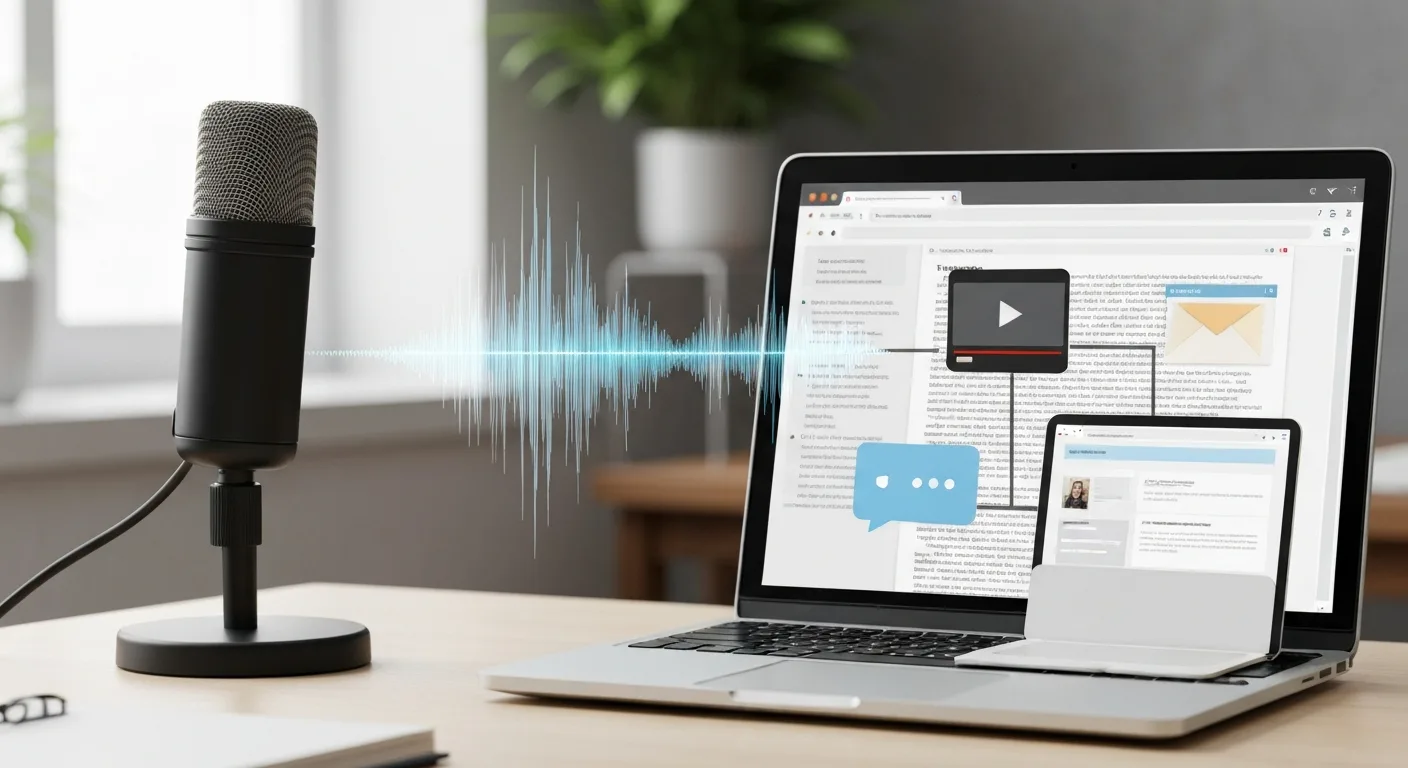
The Content Multiplier: Why Small Agencies Must Repurpose Podcast Audio
For solo clinicians, small law firms, researchers, and home health agencies, building trust is the foundation of acquiring new clients. In the US service business sector, a podcast is one of the most effective ways to establish that trust. When a potential client hears a family law attorney explain the nuances of child custody, or a home health agency director discuss navigating complex medical care, they are far more likely to convert.
However, producing a high-quality podcast takes significant time and energy. If your agency is simply uploading an MP3 to Apple Podcasts and Spotify, you are leaving massive amounts of value on the table. A standard 45-minute podcast episode contains roughly 6,000 to 7,000 spoken words. Trapped inside an audio file, those words are invisible to Google's search algorithms. They cannot be skimmed by a busy professional reading an email, and they cannot be shared easily on LinkedIn or TikTok.
This is where podcast transcription becomes a vital marketing engine. By converting your audio into highly accurate text, a single podcast episode can be transformed into comprehensive SEO blog pages, engaging short-form social media clips, and value-packed weekly newsletters. For small teams without a dedicated marketing department, this "content multiplier" strategy is the key to competing with larger firms.
The AI Transcription Tech Stack: What Actually Works for Professionals
In the past, transcription was either prohibitively expensive (requiring human transcriptionists at $1.50+ per minute) or laughably inaccurate, producing text that required hours of manual editing. Today, advanced artificial intelligence has solved this problem, but not all AI models are created equal. For niche professionals—like researchers conducting complex interviews or clinicians discussing specialized treatments—underlying technology matters.
When evaluating a transcription workflow, you are relying on a combination of powerful AI models working behind the scenes. For instance, Whisper large-v3 is widely regarded as the gold standard for open-source speech recognition. It is exceptionally skilled at understanding thick accents, background noise, and highly specialized jargon—whether that is legal terminology like "res ipsa loquitur" or medical terms like "myocardial infarction."
But transcription is not just about the words; it is about knowing who spoke them. This is where technologies like pyannote come in. Pyannote excels at speaker diarization, which is the process of automatically separating audio into "Speaker A" and "Speaker B." If you are a solo clinician interviewing a guest expert, accurate diarization prevents their quotes from being attributed to you.
Furthermore, commercial APIs like Deepgram Nova and AssemblyAI have pushed the boundaries of transcription speed and intelligence, offering rapid turnaround times and built-in natural language processing. For a small US service business, you do not need to be a software developer to use these tools. You simply need a transcription platform that leverages these advanced models under the hood, ensuring your highly technical podcast episodes are transcribed with near-perfect accuracy.
Navigating Compliance: HIPAA, BAAs, and Client Privacy
For small law firms, solo clinicians, and home health agencies, transcription is not just a marketing tool—it is often part of a broader operational workflow. You might use the same transcription platform to transcribe a public podcast on Tuesday, and a private clinical note, legal review, or research interview on Wednesday.
Because of this, data privacy and compliance cannot be an afterthought. If your podcast discusses anonymized case studies, or if you ever plan to use your transcription tool for internal patient or client data, you must operate within strict US regulatory frameworks.
Free or consumer-grade transcription tools typically train their AI models on your data, meaning your sensitive audio could theoretically be exposed. For healthcare professionals, this is a direct violation of the Health Insurance Portability and Accountability Act (HIPAA). To remain compliant, you must use a transcription service that is willing to sign a HIPAA BAA (Business Associate Agreement). A BAA legally binds the software provider to protect your data and ensures they do not use your audio for unauthorized AI training.
Additionally, home health agencies and clinicians must adhere to strict CMS (Centers for Medicare & Medicaid Services) guidelines regarding documentation and patient privacy. If your podcast explores CMS reimbursement changes and references specific clinical scenarios, having a secure, compliant transcript provides a safe paper trail. For internal clinical or research workflows, your transcription platform should ideally support seamless EHR exports or align with FHIR (Fast Healthcare Interoperability Resources) standards, ensuring that any clinical notes generated from audio can be securely and accurately transferred into your electronic health record system.
Step-by-Step Workflow: From Raw Audio to a Marketing Engine
Once you have a secure, highly accurate transcription tool in place, you can implement a streamlined workflow to turn one podcast episode into a month's worth of content. Here is the exact process small agencies use to maximize their ROI.
Step 1: Generate a Speaker-Diarized Transcript
The moment you finish recording your podcast episode, upload the long-form audio to your transcription platform. Ensure that speaker identification (diarization) is turned on. Within minutes, the AI will process the audio, leveraging models like Whisper large-v3 to decode complex terminology. Review the transcript for minor formatting preferences, but expect the raw output to be highly accurate. Export this text file; it is now the foundational asset for your entire content strategy.
Step 2: Engineer SEO-Optimized Pages
Do not simply copy and paste a giant block of text onto your website. Google penalizes poor user experiences. Instead, format the transcript into a readable, SEO-optimized show notes page.
- Write an Executive Summary: Use the first two paragraphs to summarize the episode, incorporating primary local keywords (e.g., "Chicago estate planning attorney discusses living trusts").
- Use H2 and H3 Headings: Break up the transcript using descriptive headings based on the topics discussed. This helps search engines understand the structure and context of your page.
- Highlight Pull Quotes: Take the most insightful sentences and format them as blockquotes to keep readers visually engaged.
- Capture Long-Tail Keywords: The beauty of a verbatim transcript is that humans naturally speak in long-tail keywords. When a solo clinician explains a diagnosis on a podcast, they naturally answer the exact phrasing patients type into Google. This organic SEO value is immense for local US service businesses.
Step 3: Mine for Social Media Clips
Social media algorithms favor short, punchy video and text. Instead of re-listening to a 60-minute episode to find a good 30-second clip, simply scan your transcript. Look for moments where a guest gave a contrarian opinion, explained a complex legal concept simply, or shared a compelling clinical statistic.
Highlight these sections in the text, note the timestamps, and use them to cut short audio or video clips for LinkedIn, Instagram Reels, or YouTube Shorts. You can also take text snippets directly from the transcript and post them as standalone text updates or Twitter/X threads, driving traffic back to the full episode.
Step 4: Craft the Weekly Newsletter
Your email list is your most captive audience, but they do not always have time to listen to a full podcast. Use your transcript to draft a high-value newsletter. Pull out the top three actionable takeaways from the episode. Because you already have the exact wording in your transcript, drafting this email takes minutes rather than hours. Include a link to the full audio and the SEO-optimized blog post for those who want to dive deeper.
The Economics of Repurposing: Pricing Math for Small Businesses
When evaluating transcription tools, small agencies must look closely at the pricing models. The software industry has heavily pivoted toward monthly subscriptions, but for podcasters, researchers, and small service businesses, subscriptions often result in wasted money.
Consider a small law firm that produces a bi-weekly podcast (two hours of audio per month) and occasionally conducts long research interviews for case preparation (an additional three hours). That is a total of five hours of audio per month.
Standard subscription transcription services often charge between $20 and $30 per user, per month, regardless of how much you use. Over a year, that is $360. If you take a month off from podcasting during the holidays, you still pay.
Conversely, a individually quoted model charges you purely for the minutes you transcribe. If a pay-as-you-go platform charges a fraction of a cent per minute, transcribing five hours of audio might cost less than $5 a month. Over a year, you spend $60 instead of $360—and you retain the flexibility to scale up during a busy month of research interviews, or scale down when you take a vacation.
Decision Table: Evaluating Transcription for Your Agency
| Feature Requirement | Why It Matters | Best Fit For |
|---|---|---|
| Advanced AI (Whisper large-v3, Pyannote) | Ensures medical, legal, and technical jargon is transcribed correctly, and speakers are accurately separated. | Solo clinicians, law firms, researchers, and technical B2B podcasters. |
| HIPAA BAA & Strict Data Privacy | Protects patient data, complies with CMS regulations, and ensures audio is not used for unauthorized AI training. | Home health agencies, therapists, medical researchers, and healthcare podcasters. |
| Pay-As-You-Go Pricing | Eliminates subscription fatigue. Each project is quoted in writing after the recording is reviewed. | Small agencies with fluctuating podcast schedules or sporadic research interviews. |
| Interoperability (EHR exports, FHIR) | Allows clinical notes and medical research interviews to seamlessly integrate into existing health record systems. | Clinicians and home health agencies using transcription for both marketing and internal documentation. |
Overcoming the Time Barrier for Small Agencies
The most common reason small US service businesses abandon their podcasts is burnout. Recording the audio is fun; writing the show notes, drafting the social media posts, and formatting the newsletters is tedious. By injecting an AI transcription step into your workflow, you completely remove this bottleneck.
A highly accurate transcript acts as a raw material. It empowers a solo attorney to compete with a 50-person law firm in local SEO rankings. It allows a home health agency to consistently educate its community on complex CMS changes without requiring a full-time copywriter. It allows researchers to quickly index and search hours of interview audio for the exact quote they need for a publication.
The key is choosing a tool that respects your budget, understands your complex vocabulary, and protects your sensitive data. By avoiding rigid subscriptions and opting for flexible, high-powered AI transcription, you can turn a simple audio recording into a comprehensive digital footprint.
Ready to turn your long-form audio into a powerful marketing and research asset? LessRec provides highly accurate, individually quoted, human-reviewed transcription perfectly tailored for podcasts, legal reviews, clinical notes, and research interviews. Each project is quoted in writing after the recording is reviewed. Built for professionals who demand privacy and precision, LessRec is the smart way to scale your agency's content. Create your account today and start multiplying your content with zero subscription fatigue.
Lessrec provides human-reviewed transcription: an editor listens to the recording and checks the full text. Send your project requirements for an individual written quote.
Upload audio →