Patient interview transcripts that keep terms intact
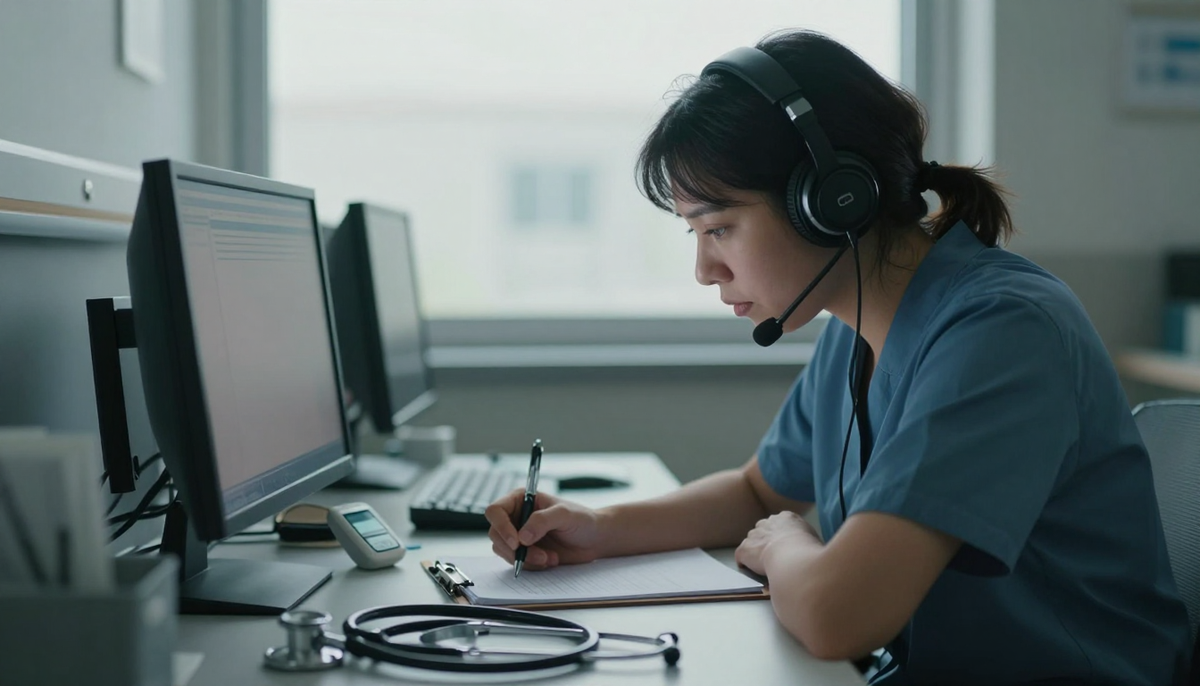
To keep meaning and medical terms intact in a patient interview transcript, you need clean audio, a short list of the names and terms that will come up, and a full listen-through by someone who checks every word against the recording, not just the parts that look odd on the page. This guide is for solo clinicians, home health agencies, researchers who interview patients, and anyone else whose transcript has to say exactly what was said.
Why one sound can change a medical meaning: the phoneme
The idea behind this whole article comes from linguistics. It is called the phoneme: the smallest unit of sound that can change the meaning of a word. Linguists in the late nineteenth and early twentieth centuries showed this with minimal pairs, which are two words that differ by a single sound, like "bat" and "pat." Swap one phoneme and you get a different word.
This was not obvious, because speech does not arrive as neat, separate sounds. It is a continuous, smeared stream. Every speaker pronounces each sound a little differently, and your brain quietly groups thousands of slightly different sounds into a few categories that matter. You do not hear raw acoustics. You hear categories, and you fill in the gaps using context.
Medicine is full of minimal pairs and near-pairs: ileum and ilium, dysphagia and dysphasia, hypo- and hyper-, perineal and peroneal, abduction and adduction, "fifteen" and "fifty." In a patient interview, the one sound that separates them may be mumbled, overlapped by a cough, or lost to a speaker turning away from the microphone. Context usually resolves it, but only if the person transcribing actually knows the context.
Here is what follows for your practice. Most errors in a transcript are not random garbage. They are plausible wrong words that differ from the right one by a single sound. They read smoothly, so you will not catch them by skimming. You catch them by giving the listener context in advance and by checking the text against the audio itself. Every step below follows from that.
Have a recording that needs an accurate transcript? An editor listens to the full recording and checks the entire transcript. Send it for an individual quote.
How to prepare a patient interview recording for accurate transcription
Good preparation protects the small sounds that carry big meaning. Before and during the recording:
- Use a dedicated microphone or recorder placed close to both speakers, not a device across the room.
- Reduce background noise: close doors, switch off fans, and pause the recording during loud interruptions.
- Ask speakers to avoid talking over each other, especially when giving doses, dates, or symptoms.
- Spell out unusual drug names, patient-specific terms, and proper names aloud the first time they come up.
- Say numbers clearly and, where it matters, repeat them a second way ("fifteen, one-five").
- Prepare a written term list: medications, conditions, procedures, providers, and places likely to appear.
- Note who the speakers are and how you want them labeled in the transcript.
- Record a short test and play it back before the real interview.
What to check in a patient interview transcript
When the transcript comes back, read it with the audio open. Focus your attention where a single phoneme can flip the meaning.
| Check | Why it matters |
|---|---|
| Prefixes and suffixes (hypo/hyper, -ectomy/-otomy) | One syllable can reverse or change the finding. |
| Numbers, doses, and units | "Fifteen" and "fifty" are easy to confuse in quiet or fast speech. |
| Laterality (left/right) | Short words are easily swallowed or misheard. |
| Negations ("can" vs. "can't") | The final sound is often barely audible, yet it inverts the meaning. |
| Drug and condition names | Many sound alike and are spelled very differently. |
| Speaker labels | A patient's words attributed to the clinician change the record. |
Mark anything you are unsure about with a timestamp so you can return to it, instead of guessing.
Common mistakes and how to avoid them
Trusting a draft because it reads well
Automatic speech-to-text drafts are built to produce fluent, likely-sounding text. That is exactly the problem: when the audio is unclear, they tend to choose a common word that fits the sentence, not the rare medical term that was actually said. Avoid this by checking against the recording, never against your sense of what "sounds right."
Spot-checking instead of checking everything
Errors cluster where the audio is weak, and that is not always where you expect. A partial review leaves the rest of the transcript unverified. If accuracy matters, the whole recording needs a listen.
Cleaning up the patient's words
Smoothing a hesitant or informal answer can change its meaning, especially in research interviews where wording is the data. Agree on a style in advance: verbatim, clean verbatim, or something in between.
Leaving no trail for unclear audio
A confident guess hides the uncertainty. Ask for inaudible or unclear passages to be flagged with a timestamp so you can decide what to do with them.
What you can do yourself vs. when to hand it to a professional
You can handle a lot on your own. Short, clear recordings with one or two speakers and familiar terms are often manageable if you have the time to listen and type carefully. The preparation checklist above helps either way, and nobody knows your patients' context better than you.
The balance shifts with length, number of speakers, audio quality, and how dense the terminology is. It also shifts with your time: an hour spent transcribing is an hour away from patients, analysis, or running your agency.
For example, imagine a researcher with a set of long patient interviews, several speakers, some phone audio, and a mix of medication names and personal stories. An automatic draft might give them something to start with, but they would still need to listen to every minute to catch the plausible wrong words. At that point, handing the recordings and a term list to a human-edited service may simply be a better use of their time. If you prefer to do it yourself, that is a reasonable choice too. Just budget for a full listen-through.
Request a quote from LessRec
If you would like help with patient interviews, clinical dictation, or research recordings, send us your audio details and any term list in writing, and we will prepare an individual quote after reviewing your material and requirements. As part of the ordered service, an editor listens to the full recording and checks the entire transcript, so that one sound never quietly changes what your patient said.
Related articles
- Podcast Show Notes From a Transcript, Step by Step
- Client call transcription checklist for solo lawyers
- Transcription quote factors and how to prepare audio
FAQ
How do I prepare a patient interview recording for accurate transcription?
Use a dedicated microphone close to both speakers, reduce background noise, and spell out unusual drug names and proper names aloud. Prepare a written term list and record a short test before the real interview.
What should I check first in a patient interview transcript?
Focus on places where a single sound can flip the meaning: prefixes and suffixes, numbers and doses, left/right, negations like can vs. can't , drug names, and speaker labels. Read with the audio open and check against the recording.
Why can't I trust an automatic transcript that reads smoothly?
Automatic drafts tend to produce fluent, likely-sounding text, so unclear audio often becomes a common word that fits the sentence rather than the rare medical term actually said. These plausible wrong words are easy to miss when skimming.
When should I hand patient interview transcription to a professional?
Consider it when recordings are long, have several speakers, poor audio, or dense terminology, or when transcribing takes time away from patients or analysis. Short, clear recordings with familiar terms are often manageable yourself if you budget for a full listen-through.
Send your recording for an individual quote. An editor listens to the full recording and checks the entire transcript.
Request a quote →