Home health LVN visit documentation: OASIS-E2 notes, wound care and medication reconciliation with human review
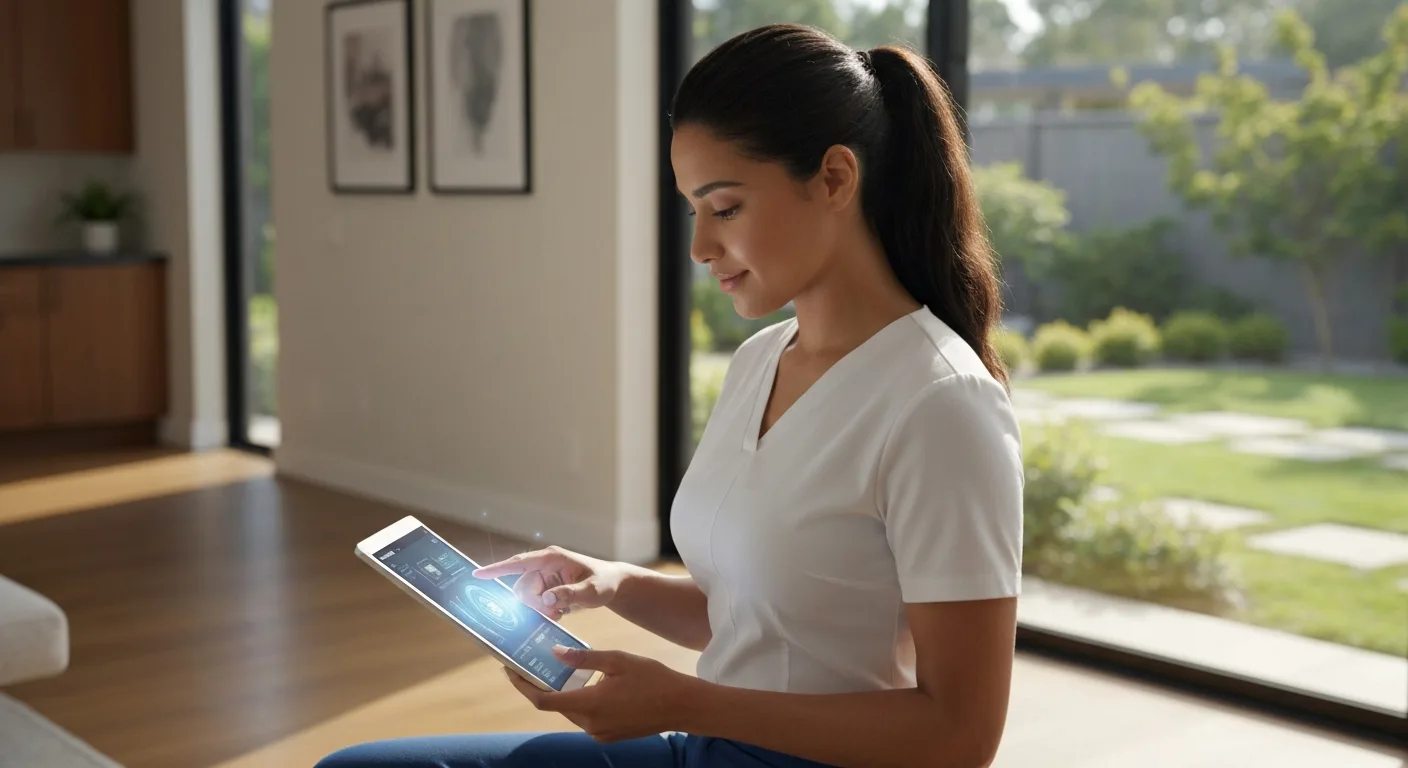
The New Era of Home Health Documentation: AI Scribes for LVN and RN Visits
Home health care in the United States is experiencing unprecedented demand. As the population ages and hospital-at-home models become the gold standard for post-acute care, agencies are dispatching clinicians to living rooms across the country. Yet, the professionals delivering this vital service—Licensed Vocational Nurses (LVNs) and Registered Nurses (RNs)—are drowning in administrative work. A typical 45-minute home visit often generates an additional 45 to 60 minutes of "pajama time" charting.
The transition to complex regulatory frameworks, specifically the Centers for Medicare & Medicaid Services (CMS) OASIS-E2 requirements, has pushed clinician burnout to critical levels. To survive, solo clinicians and home health agencies are turning to specialized medical AI scribes. By leveraging advanced speech-to-text and natural language processing, these tools listen to the patient encounter, synthesize the medical data, and automatically generate structured clinical notes, wound care assessments, and medication reconciliations.
The Crushing Burden of CMS and OASIS-E2 Compliance
For US home health agencies, accurate documentation is not just a clinical necessity; it is the sole driver of reimbursement and quality scores. The Outcome and Assessment Information Set (OASIS) is the foundation of this process. With the implementation of OASIS-E2, CMS has introduced even more rigorous data collection requirements designed to standardize quality measures across all post-acute care settings.
OASIS-E2 places a heavy emphasis on Social Determinants of Health (SDOH), cognitive patterns, behavioral assessments (like the PHQ-2 to 9 for depression), and detailed functional abilities (Section GG items). Capturing this data manually requires the clinician to act as an interrogator rather than a caregiver, staring at a tablet screen while firing off a 100-plus item questionnaire.
An AI scribe fundamentally changes this dynamic. Instead of rigid data entry, the clinician can have a natural, empathetic conversation with the patient. The AI listens in the background, identifies the relevant clinical indicators, and maps the conversational data directly to the required OASIS-E2 fields. If a patient mentions they are struggling to afford their groceries and rely on a neighbor to manage their pillboxes, the AI scribe automatically extracts this information to fulfill the SDOH and medication management sections of the OASIS assessment.
Transforming Specific Home Health Workflows
1. High-Precision Wound Care Documentation
Wound care is one of the most common and critical tasks performed by LVNs in the home setting. It is highly visual, precise, and requires standardized terminology to track healing progress over time. Traditionally, an LVN assessing a diabetic foot ulcer or a stage 3 pressure injury might jot measurements on a glove or a scrap of paper, only to decipher those notes hours later.
With an ambient AI scribe, the clinician simply narrates the assessment aloud while their hands remain gloved and focused on patient care. The AI is trained to understand complex dermatological and wound care terminology.
- Narrated Input: "The wound on the left lateral malleolus measures 4.2 centimeters in length by 3.1 centimeters in width, with a depth of 0.4 centimeters. The wound bed is approximately 80 percent healthy granulation tissue and 20 percent yellow slough. There is no undermining or tunneling present. Peri-wound skin is intact but mildly erythematous. Moderate serosanguineous exudate noted on the old foam dressing. Cleansed with normal saline, applied skin prep, and covered with a new hydrocolloid dressing."
- AI Output: The scribe automatically categorizes this narrative into distinct EHR fields: Location, Dimensions (L x W x D), Tissue Type, Exudate, Peri-wound Status, and Treatment Applied.
2. Flawless Medication Reconciliation
Medication errors during transitions of care are a leading cause of hospital readmissions. When a patient returns home from a skilled nursing facility, they often present the home health nurse with a chaotic plastic bag filled with old pill bottles, new prescriptions, and over-the-counter supplements.
Medication reconciliation requires absolute precision. The clinician must document the drug name, dosage, route, frequency, and purpose, then cross-reference this list against the hospital discharge summary to identify discrepancies. AI scribes shine in this workflow. As the LVN reads the labels aloud—"Metoprolol succinate 50 milligrams PO daily, holding for systolic blood pressure under 100"—the AI captures the exact pharmacology data. Advanced models are specifically trained to distinguish between look-alike and sound-alike drug names, ensuring that "clonidine" is not transcribed as "klonopin."
Under the Hood: The Technology Powering Clinical Scribes
Building an AI scribe that can operate effectively in a home health environment is technically demanding. Unlike a quiet, sterile clinic, a patient's home is filled with unpredictable acoustic variables: televisions blaring in the background, dogs barking, and multiple family members talking over one another. To handle this, modern AI scribes rely on an ensemble of cutting-edge technologies.
- Whisper large-v3: Originally developed by OpenAI, the Whisper large-v3 model is the gold standard for automatic speech recognition (ASR). It is exceptionally resilient to background noise and heavily accented speech. More importantly, it has been exposed to vast amounts of medical literature, allowing it to accurately transcribe dense clinical jargon without requiring the user to manually train the software.
- pyannote for Speaker Diarization: Transcription is only half the battle; the AI must also know who is speaking. Speaker diarization technology, such as the open-source pyannote framework, separates the audio into distinct speaker tracks. This ensures that the patient's subjective complaints are documented under the "History of Present Illness," while the LVN's clinical observations are documented under the "Objective Assessment."
- Deepgram Nova and AssemblyAI: For workflows that require real-time, streaming transcription, engines like Deepgram Nova and AssemblyAI provide ultra-low latency processing. These APIs allow clinicians to see the text appearing on their tablet in real-time, providing immediate visual confirmation that the data is being captured accurately.
- FHIR and EHR Exports: Once the AI generates the structured SOAP note or OASIS-E2 summary, the data must securely enter the agency's Electronic Health Record (EHR). Utilizing Fast Healthcare Interoperability Resources (FHIR) standards, AI platforms can push structured data payloads directly into systems like Homecare Homebase, Kinnser, or MatrixCare via seamless EHR exports.
Workflow Steps for Implementing an AI Scribe in the Home
Integrating an AI scribe into a home health agency's daily operations requires a structured approach to ensure both clinical efficiency and legal compliance. Here is the standard workflow for an LVN utilizing ambient AI technology at the bedside:
- Patient Consent: Upon entering the home, the clinician explains the technology to the patient and obtains verbal or written consent to record the encounter for documentation purposes.
- Initiate Recording: Using a secure smartphone app or tablet, the clinician taps "record" and places the device on a nearby table.
- Natural Interaction: The clinician conducts the visit normally, performing the physical assessment, reviewing medications, and discussing the care plan. The clinician may intentionally "talk to the room" (e.g., "I'm noting 2+ pitting edema in the bilateral lower extremities") to ensure the AI captures objective findings.
- Stop and Process: At the end of the visit, the clinician stops the recording. The audio is encrypted and sent to the cloud for processing, or processed locally depending on the app's architecture.
- Review and Export: Within seconds to minutes, a fully structured clinical note is generated. The clinician reviews the note for accuracy, makes any minor edits, and triggers the EHR export.
Compliance Caveats: HIPAA, CMS, and Patient Privacy
In the United States healthcare system, convenience can never come at the expense of patient privacy. When utilizing AI transcription services, home health agencies and solo clinicians must navigate strict regulatory frameworks.
First and foremost is the Health Insurance Portability and Accountability Act (HIPAA). Any AI tool used in a clinical setting must be fully HIPAA-compliant. This means the vendor must sign a Business Associate Agreement (BAA), legally binding them to protect Protected Health Information (PHI). Data must be encrypted both in transit (using TLS 1.2 or higher) and at rest (using AES-256 encryption).
Furthermore, agencies must be aware of state-level recording laws. The US is divided into "one-party consent" and "two-party consent" (all-party consent) states. In a two-party consent state like California or Florida, it is a criminal offense to record a conversation without the explicit permission of everyone involved. Home health agencies must build formal consent protocols into their intake paperwork to ensure compliance before an AI scribe is ever activated.
Pricing Math: Pay-As-You-Go vs. Subscriptions
When evaluating AI scribes, pricing structures can dramatically impact an agency's bottom line. The market is generally split into two models: rigid monthly subscriptions and flexible individually quoted pricing.
Subscription models typically charge between $70 and $150 per user, per month. While this makes sense for a primary care physician seeing 40 patients a day in a clinic, it is often a terrible financial fit for home health agencies. LVNs and RNs have highly fluctuating schedules. Factoring in drive time, an LVN might only see 5 to 6 patients a day. Furthermore, agencies frequently employ part-time or per-diem nurses. Paying a flat $100 monthly seat license for a per-diem nurse who only works two weekends a month destroys your return on investment (ROI).
Individually quoted pricing models charge strictly by the minute of audio processed. This aligns perfectly with the variable nature of home health and US service businesses.
Cost Comparison Decision Table
| Metric | Traditional Subscription Model | Pay-As-You-Go Model (e.g., $0.02/min) |
|---|---|---|
| Monthly Cost for Full-Time LVN (120 visits/mo, 40 mins/visit = 4,800 mins) |
$99.00 flat rate | $96.00 based on exact usage |
| Monthly Cost for Per-Diem LVN (20 visits/mo, 40 mins/visit = 800 mins) |
$99.00 flat rate (wasted spend) | $16.00 based on exact usage |
| Cost for Vacations/Sick Leave | Full price regardless of usage | $0.00 (No usage = no cost) |
| Agency Scalability (50 Clinicians) | $4,950/month fixed overhead | Scales dynamically with patient census |
Each project is quoted in writing after the recording is reviewed.
Reclaiming the Clinician's Time
The core mission of home health care is to keep patients safe, healthy, and out of the hospital. Every hour an LVN spends battling drop-down menus in an OASIS-E2 form is an hour stolen from patient care—or an hour stolen from their own family at the end of a grueling shift. AI scribes are no longer a futuristic luxury; they are a necessary utility for survival in modern healthcare. By automating wound care details, medication reconciliation, and complex regulatory documentation, AI empowers nurses to do what they do best: care for the patient.
If you are a solo clinician, a home health agency, a legal researcher, or a podcaster looking for highly accurate, HIPAA-compliant transcription without the burden of expensive monthly subscriptions, it is time to rethink your tooling. LessRec offers a secure, individually quoted, human-reviewed transcription service tailored for long audio, clinical notes, legal review, and research interviews. Each project is quoted in writing after the recording is reviewed. Stop paying for idle software seats and start reclaiming your time with LessRec today.
Lessrec provides human-reviewed transcription: an editor listens to the recording and checks the full text. Send your project requirements for an individual written quote.
Upload audio →